How Long Do We Have?
The philosophers and long past history tell us ...
At about the time when the original thirteen American states adopted theirnew constitution in 1787, Alexander Tytler, a Scottish history professor at theUniversity of Edinburgh, had this to say about the decline and fall of the Athenian Republicsome 2,000 years earlier:
"A democracy is always temporary in nature; itsimply cannot exist as a permanent form of government. A democracy will continueto exist up until the time that voters discover they can vote themselves generousgifts from the public treasury. From that moment on, the majority always votefor the candidates who promise the most benefits from the public treasury, withthe result that every democracy will finally collapse due to loose fiscal policy,which is always followed by a dictatorship. The average age of the world's greatestcivilizations from the beginning of history, has been about 200 years. Duringthose 200 years, those nations always progressed through the following sequence:
1.From bondage to spiritual faith;
2. From spiritual faith to great courage;
3. From courage to liberty;
4. From liberty to abundance;
5. From abundance to complacency;
6. From complacency to apathy;
7. From apathy to dependence;
8. From dependence back into bondage." | 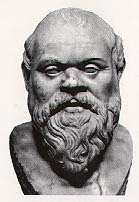 | Socrates (470-399 BC) was a true philosopher because he was willing to die for the truth. In his pursuit of truth he was asking questions in Athens, and in this process exposed ignorance and devious designs of some influential people. They resented this, and decided to get rid of him. Socrates was formally accused of impiety, and condemned to death. His friends, among them Plato (427-347 BC), provided an opportunity for escape, but Socrates declined. He remained true to his conviction, stating:
'Un e x a m i n e d l i f e i s n o t wo r t h l i v i n g'.
The corrupt society that didnot tolerate hearing the truth did not last much longer, and Athens was ruined.It is a historical fact that all civilizations that refused to listen to philosophershave vanished. It is impossible for falsehood to last. |
|
It is believed by some pundits that the United States is now, 223 years after the signing of the Declaration of Independence, "somewhere between the complacency and apathy phases of Tytler's definition of democracy, with some forty percent of the nation's population already having reached the governmental dependency phase."
The rest of the Western free and democratic world is either leading the way or following close behind.
History always tends to repeat itself.
Thomas Jefferson: “A democracy is nothing more than mob rule, where fifty-one percent of the people may take away the rights of the other forty-nine.”